
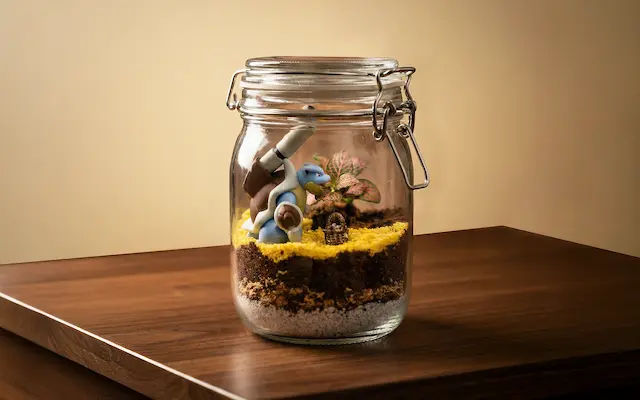
If you’re searching for terrarium singapore, you’re likely fascinated by the idea of building a miniature world inside a glass container.
Maybe you’ve seen lush moss growing inside a jar and wondered:
- How does that survive without constant watering?
- What terrarium plants work best in Singapore?
- Is maintenance difficult?
- Can beginners build a terrarium successfully?
The challenge is this: most articles show beautiful photos but don’t explain how terrarium ecosystems actually function — especially in Singapore’s humid climate.
Bottom line: A terrarium thrives when plant compatibility, moisture balance, layering structure, and environmental placement are aligned. Understanding this balance is what determines whether your terrarium lasts for months — or for years.
In this guide, you’ll learn:
- How a terrarium ecosystem works
- The different types of terrariums you can create
- Best plants suited for Singapore’s environment
- Proper layering techniques and materials
- Climate-specific care considerations
- Common mistakes and troubleshooting
- Design principles and long-term growth expectations
Let’s begin with the fundamentals.
What Is a Terrarium?
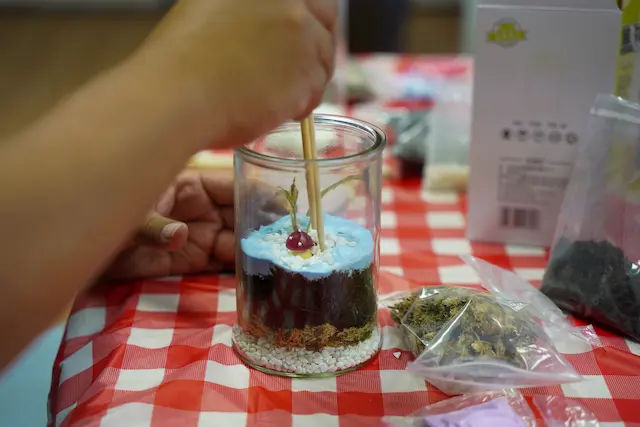
A terrarium is a miniature garden built inside a glass container. It recreates a small ecosystem within a controlled indoor space.
Unlike traditional outdoor gardening, a terrarium operates within boundaries. Everything that happens inside the container affects the entire system.
A typical terrarium includes:
- A glass container
- Drainage stones or gravel at the bottom
- Activated charcoal
- Soil layer
- Carefully selected plants
- Decorative materials like moss or stone
When built correctly, a terrarium ecosystem mimics nature.
Water evaporates from the soil and leaves, condenses on the walls of the glass, and returns to the bottom layer. This natural cycle allows plants to survive with minimal watering.
In Singapore’s urban environment — where outdoor garden space is limited — terrariums provide a compact way to engage with nature indoors.
How Terrarium Ecosystems Work
A terrarium is essentially one of the simplest visible ecosystems you can observe.
Inside a closed terrarium:
- Plants absorb water through their roots
- Leaves release moisture through transpiration
- Moisture condenses on the glass walls
- Water drips back into the soil
This cycle repeats continuously.
However, ecosystems depend on balance.
Too much water leads to root rot.
Too little moisture leads to dehydration.
In our experience running terrarium workshops for different group sizes in Singapore, overwatering is the most common issue.
People often assume more water equals healthier plants. In reality, a properly built closed terrarium requires surprisingly little water — especially given Singapore’s natural humidity.
Types of Terrariums You Can Create in Singapore
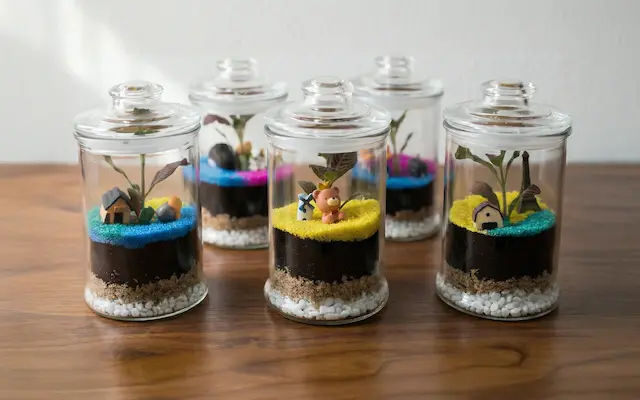
When people search for terrarium singapore, they often don’t realise there are different structural types.
Choosing the correct format prevents future maintenance problems.
1. Closed Tropical Terrarium
Best for:
- Moss
- Fittonia
- Ferns
This type traps humidity inside the glass container. It works well in Singapore’s climate because ambient humidity already supports tropical plants.
Light condensation on the walls is normal and indicates a functioning ecosystem.
2. Open Desert Terrarium
Best for:
- Succulents
- Cacti
- Desert plants
These plants prefer airflow and brighter light.
An open terrarium prevents excess moisture buildup.
Never mix desert plants with moss in the same container. Their environmental needs conflict.
3. Air Plant Terrarium
Air plants do not require soil.
They absorb nutrients and moisture through their leaves.
These terrariums use decorative stones or driftwood instead of traditional dirt layers.
They require occasional misting and indirect light.
4. Forest-Style Ecosystem Terrarium
This design mimics a miniature forest floor.
It includes:
- Multiple plant heights
- Moss carpets
- Natural stones
- Wood accents
It requires careful layering and plant compatibility knowledge.
Best Terrarium Plants for Singapore
Selecting compatible terrarium plants determines long-term success.
For Closed Terrariums
- Moss
- Fittonia
- Ferns
These thrive in stable humidity.
For Open Terrariums
- Succulents
- Cacti
- Air plants
These require less moisture and more airflow.
Plant compatibility is more important than decorative elements.
Choosing the Right Terrarium Container
The terrarium container influences airflow, condensation, and maintenance.
Consider:
- Opening size
- Depth
- Shape
- Glass thickness
Wide openings are easier for beginners.
Narrow openings retain humidity but require careful planting tools.
Round containers circulate moisture differently compared to angular shapes.
In workshop settings, medium-sized containers often produce the most stable results.
Layer Structure & Materials
A terrarium is built in functional layers.
- Drainage stones or gravel at the bottom
- Activated charcoal
- Soil layer
- Planting layer
- Decorative top layer
Drainage stones prevent roots from sitting in pooled water.
Charcoal filters impurities and regulates bacterial growth.
Soil provides nutrients.
Skipping charcoal or reducing drainage thickness often leads to imbalance over time.
Precision layering ensures ecosystem stability.
Singapore Climate Considerations
Singapore’s tropical climate influences terrarium behaviour.
Humidity
High humidity supports moss but increases overwatering risk.
Air Conditioning
Air-conditioned offices reduce ambient moisture.
Terrariums placed directly under strong vents may dry faster.
Sunlight & Heat
Direct sun magnifies heat through glass.
Always place terrariums in bright indirect light.
Environmental placement is critical for longevity.
Maintenance & Care Guide
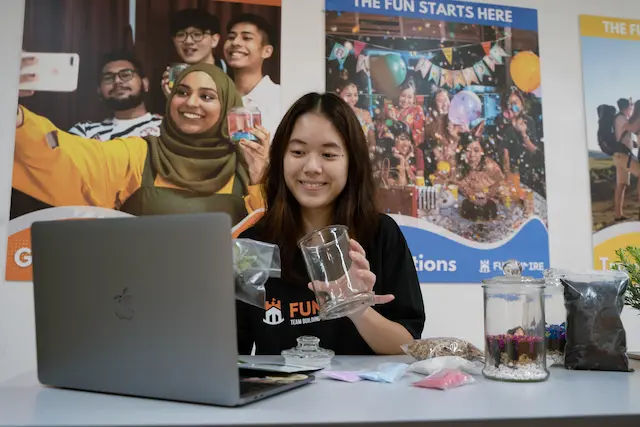
Terrariums are low maintenance, not zero maintenance.
Watering
- Closed systems require minimal water.
- Use a spray bottle instead of pouring.
- Check soil moisture before adding water.
Pruning
- Remove yellow leaves.
- Prevent overcrowding.
Monitoring Condensation
- Light misting is healthy.
- Constant dripping indicates excess moisture.
Observation is more important than frequent watering.
Advanced Ecosystem Science
A terrarium ecosystem depends on:
- Photosynthesis
- Transpiration
- Microbial soil activity
Microorganisms break down organic matter and recycle nutrients.
Activated charcoal helps maintain soil balance.
In humid climates like Singapore, microbial activity is accelerated — making charcoal even more important.
Terrarium Design Styles & Aesthetic Approaches
Terrariums are both ecosystems and design pieces.
Popular styles include:
Minimalist Style
Clean stone layers and one focal plant.
Natural Forest Style
Dense moss and layered greenery.
Desert Landscape
Sand textures and sculptural succulents.
Zen-Inspired
Balanced stone placement and negative space.
Design influences airflow, plant growth, and long-term stability.
Placement of taller plants at the back creates visual depth.
Stones help stabilise soil and prevent erosion during watering.
Placement Guide: Home, Office & Classroom
Home Placement
- Avoid direct sun
- Choose stable surfaces
- Keep away from heat sources
Office Placement
- Avoid strong aircon vents
- Ensure indirect lighting
- Place on steady desks
Classroom Placement
- Position out of heavy traffic
- Assign shared care responsibility
- Use stable containers
Placement affects moisture levels and ecosystem balance.
Seasonal & Long-Term Growth Patterns in Singapore
Although Singapore does not have distinct seasons, monsoon periods influence:
- Light levels
- Humidity
- Condensation frequency
During rainy periods, condensation may increase.
During drier periods, light exposure changes slightly.
Understanding subtle climate shifts helps maintain balance.
How to Plan a Terrarium Before You Start
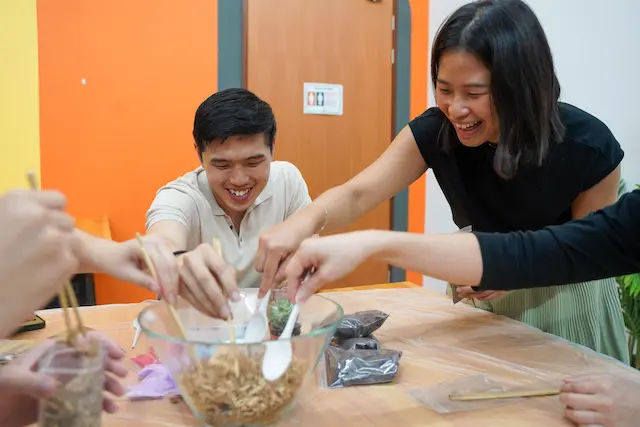
One of the biggest reasons terrariums fail is not poor materials — it’s poor planning.
Before you buy a glass container or select plants, it helps to step back and define your purpose.
Ask yourself:
- Is this terrarium for decoration in your home?
- Is it meant as a gift?
- Is it for educational purposes?
- Are you building it as part of a workshop experience?
- Do you want a long-term ecosystem or a temporary display piece?
Clarity changes your decisions.
If you are new to gardening, a smaller closed terrarium with moss and fittonia is typically more forgiving than a large mixed-plant build. Smaller ecosystems stabilise faster and are easier to monitor.
Next, assess your available light.
Walk around your space and observe:
- Where does bright indirect light naturally fall?
- Is the area near a window?
- Is it heavily air-conditioned?
- Is there direct afternoon sun?
Terrariums depend more on placement than most people realise. Planning around your environment reduces future maintenance issues.
Then choose your ecosystem type before buying materials.
Do not:
- Buy succulents first and then decide to build a closed system.
- Choose a narrow container without considering planting difficulty.
- Purchase decorative elements before confirming plant compatibility.
Another overlooked factor is size.
A large terrarium may look impressive, but larger ecosystems require more precise layering and plant balance. Beginners often underestimate this.
A simple planning checklist helps:
- Define ecosystem type (closed tropical or open desert)
- Confirm light conditions in your space
- Choose appropriate container size
- Select compatible plants
- Prepare drainage stones, charcoal, and soil in advance
- Avoid impulse plant combinations
Planning takes 15 minutes. Fixing a failing terrarium can take weeks.
Detailed Breakdown of Terrarium Materials & Why Each Matters

Terrariums are often described as “stones, soil, and plants.” In reality, each material plays a specific functional role.
Understanding these roles increases long-term stability.
Drainage Stones & Gravel
The bottom layer prevents plant roots from sitting in pooled water.
Water naturally moves downward. Without adequate drainage stones or gravel, excess moisture saturates the soil layer.
Thickness matters.
A thin decorative stone layer is not the same as a proper drainage base. For medium containers, a drainage layer of approximately 2–3 cm creates effective separation between water and soil.
This is particularly important in Singapore’s humid climate where evaporation rates differ from drier regions.
Activated Charcoal
Activated charcoal is not decorative.
It:
- Absorbs impurities
- Reduces odour
- Regulates bacterial growth
- Helps filter excess moisture
In humid environments, microbial activity is accelerated. Charcoal acts as a stabilising buffer inside the ecosystem.
Skipping charcoal might not cause immediate failure, but over time soil imbalance becomes noticeable.
Soil Composition
Not all soil works in a terrarium.
Regular garden soil often compacts too tightly inside a glass container. Compacted soil reduces airflow to roots and traps excess moisture.
Terrarium soil should:
- Drain well
- Retain nutrients
- Maintain airflow pockets
Loose, well-draining mixes prevent root rot.
Decorative Top Layer
The top layer may include moss, sand, or stone.
This layer serves both aesthetic and functional roles.
Moss can help regulate moisture levels.
Stone prevents soil erosion when watering.
Sand adds visual contrast in desert builds.
Every material should serve a purpose beyond appearance.
Light Science: Understanding Indoor Light in Singapore
Light is one of the most misunderstood factors in terrarium success.
Many people assume “near a window” equals good light.
In reality, light intensity varies significantly depending on:
- Window direction (east, west, north-facing)
- Obstructions from nearby buildings
- Curtain thickness
- Time of day
Direct Sun vs Bright Indirect Light
Direct sun creates intense heat inside a glass container. The greenhouse effect magnifies temperature rapidly.
Bright indirect light provides sufficient energy for photosynthesis without overheating the ecosystem.
A simple test:
Hold your hand near the intended placement spot.
If the shadow is sharp and well-defined, light may be too strong.
If the shadow is soft and diffused, conditions are likely suitable.
Office Lighting Considerations
Office LED or fluorescent lighting can sustain certain terrarium plants, especially moss and ferns, but growth may be slower.
Avoid placing terrariums directly under harsh spotlights.
Air-conditioned environments reduce humidity, meaning closed terrariums may require occasional light misting.
Signs of Light Imbalance
Too much light:
- Leaf burn
- Yellow patches
- Overheating condensation
Too little light:
- Leggy growth
- Pale leaves
- Slow development
Understanding light conditions in Singapore homes — especially HDB layouts — improves ecosystem stability significantly.
Terrarium Growth Timeline: What to Expect Week by Week
.webp)
Many beginners expect instant lush growth.
Terrariums evolve gradually.
Understanding the timeline prevents unnecessary adjustments.
Week 1–2: Adjustment Phase
Plants adapt to new soil and humidity conditions.
You may observe:
- Slight condensation fluctuation
- Minor leaf repositioning
- Settling of soil layers
Avoid adjusting watering during this phase unless condensation disappears entirely.
Month 1–3: Root Establishment
Roots begin expanding into soil.
Moss may slowly spread.
Growth becomes more visible but remains subtle.
This phase determines long-term stability.
6 Months and Beyond
The ecosystem stabilises.
You may notice:
- Increased moss coverage
- Slight plant height growth
- Occasional pruning needs
Terrariums reward patience. They are not fast-growth systems.
Comparing Terrariums to Other Indoor Plant Options
Understanding how terrariums differ from other indoor plants clarifies expectations.
Potted Houseplants
Require:
- Regular watering
- Drainage trays
- More space
- Frequent pruning
Terrariums require less frequent watering and occupy minimal space.
Hydroponics
Hydroponics systems require:
- Water monitoring
- Nutrient balancing
- Equipment maintenance
Terrariums are simpler ecosystems with fewer moving parts.
Desktop Succulents
Succulents in pots may require similar light but lack ecosystem cycling.
A terrarium integrates layers and moisture regulation inside one container.
Each option serves different preferences.
Terrariums suit those who prefer compact, self-regulating environments.
Mistakes Even Intermediate Hobbyists Make
Even experienced builders occasionally overlook subtle issues.
Common intermediate mistakes include:
- Overcrowding plants for immediate fullness
- Ignoring root trimming over time
- Neglecting seasonal light shifts
- Using fertiliser inside closed systems
- Allowing soil to compact without aeration
Closed ecosystems rarely require fertiliser. Adding nutrients can disrupt balance.
Maintenance should be light and deliberate.
When to Rebuild or Refresh a Terrarium
Terrariums can last years, but some signs indicate refresh may be necessary.
Consider rebuilding if:
- Soil compacts significantly
- Persistent mould recurs despite ventilation
- Plants outgrow container size
- Root systems overwhelm available space
Refreshing involves:
- Removing plants gently
- Replacing compacted soil
- Reinforcing drainage layer
- Rebuilding layers properly
A rebuild is not failure — it is part of ecosystem evolution.
Understanding Balance: The Core Principle Behind Every Successful Terrarium
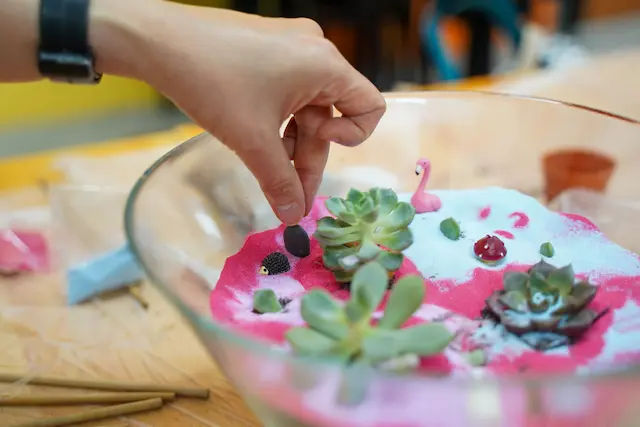
If there is one concept that determines whether a terrarium singapore build thrives or fails, it is balance.
A terrarium is not simply a decorative glass container with plants inside. It is a controlled environment where every component affects the others.
When beginners encounter problems, it is rarely due to one catastrophic mistake. More often, it is the result of small imbalances that compound over time.
Understanding balance helps you diagnose issues before they escalate.
Moisture Balance
Water is both essential and risky inside a terrarium.
In a closed ecosystem, moisture cycles continuously. Because Singapore already has high ambient humidity, adding excessive water disrupts this natural cycle quickly.
Healthy signs of moisture balance:
- Light condensation in the morning
- Clear glass later in the day
- Soil that feels slightly damp, not wet
Unhealthy signs:
- Constant heavy droplets running down the walls
- Soil that looks saturated at the bottom
- Mushy plant stems
Moisture balance is not about watering frequency. It is about observing how the system behaves after watering.
Plant Balance
Every plant has specific environmental needs.
Moss thrives in high humidity.
Succulents prefer airflow.
Ferns tolerate stable moisture.
Cacti prefer dryness.
Mixing incompatible plants creates internal competition within the ecosystem.
In structured terrarium workshops, we’ve found that participants who follow plant compatibility guidelines experience fewer long-term issues.
Balance begins with plant selection.
Light Balance
Light fuels photosynthesis, but excess light inside a glass container increases heat.
Singapore’s sunlight is intense. Even indirect light near west-facing windows can create internal temperature spikes.
If a terrarium feels warm to the touch, it may be receiving too much direct exposure.
On the other hand, insufficient light causes slow growth and pale leaves.
Balanced light supports gradual, steady development.
Space Balance
Terrariums are miniature environments. Space matters.
Overcrowding plants may create a visually full display immediately, but roots compete beneath the soil layer.
When roots entangle excessively, nutrient absorption becomes uneven.
Leave breathing room between plants.
A terrarium should feel layered, not congested.
Layer Balance
Drainage stones, charcoal, soil, and decorative layers must work together.
Too thin a drainage layer increases water stagnation risk.
Too thick a soil layer may trap excess moisture if drainage is insufficient.
Charcoal should be evenly distributed rather than clumped.
Each layer plays a stabilising role.
When layers are proportionate, the ecosystem regulates itself more effectively.
Environmental Balance
Singapore’s climate adds another dimension.
Humidity outside the container influences humidity inside.
Air conditioning changes evaporation patterns.
Monsoon seasons affect ambient moisture.
Placement within your home or office should complement the ecosystem type you’ve chosen.
For example:
- Closed terrariums adapt well to naturally humid areas.
- Open desert terrariums perform better in brighter, well-ventilated spaces.
Environmental awareness strengthens long-term stability.
Observation: The Missing Skill
Perhaps the most important part of balance is observation.
A terrarium does not require daily adjustment.
It requires attentive watching.
Look for:
- Changes in leaf colour
- Condensation patterns
- Soil moisture levels
- Growth direction toward light
Small adjustments early prevent larger corrections later.
In our experience guiding terrarium builds, the participants who succeed long-term are not those who water the most — but those who observe the most.
Balance is not about perfection.
It is about maintaining equilibrium across moisture, light, plants, layers, and environment.
When these elements align, a terrarium becomes remarkably resilient.
And once you understand this principle, maintaining a terrarium in Singapore becomes less about guesswork — and more about informed stewardship of a living miniature ecosystem.
Terrarium as a Long-Term Hobby
Many beginners build one terrarium and stop.
Others develop deeper interest in ecosystems.
Over time, enthusiasts may:
- Experiment with larger containers
- Explore plant diversity
- Study micro-ecosystem balance
Terrarium gardening rewards observation and patience.
Corporate & Educational Use Cases
Terrariums are often used in:
- Corporate bonding sessions
- School science enrichment
Unlike competitive activities, terrarium building encourages calm collaboration.
From operational experience, structured facilitation improves outcomes significantly.
Clear demonstrations prevent layering mistakes.
Material pre-portioning improves session flow.
Sustainability & Urban Gardening
Terrariums support eco-conscious habits.
You can:
- Reuse glass jars
- Upcycle containers
- Use natural materials
In dense urban Singapore, terrariums provide a compact gardening alternative.
They promote small-scale sustainability.
When Terrariums May Not Be Suitable
Terrariums may not suit individuals who:
- Prefer large outdoor gardens
- Enjoy high-maintenance plants
- Want rapid plant growth
Terrariums thrive on stability and slow progression.
Conclusion: Why Terrarium Singapore Continues to Grow
Interest in terrarium singapore reflects broader shifts toward:
- Compact urban gardening
- Sustainable living
- Mindful design
- Environmental awareness
A terrarium is more than decoration.
It is:
- A miniature ecosystem
- A science lesson
- A sustainable gardening method
- A calming indoor focal point
When built with proper layering, compatible plants, balanced moisture, and climate awareness, a terrarium can thrive for years.
Balance is the foundation.
FAQ: Terrarium Singapore
What is a terrarium?
A terrarium is a miniature ecosystem built inside a glass container that cycles water through evaporation and condensation.
What terrarium plants are suitable in Singapore?
Moss, fittonia, and ferns suit closed systems. Succulents, cacti, and air plants suit open systems.
How often should I water my terrarium?
Closed terrariums require minimal watering. Always check soil moisture first.
Are terrariums difficult to maintain?
No. They are low maintenance when built and placed correctly.
Can beginners build a terrarium successfully?
Yes. With proper layering, plant compatibility, and moisture control, beginners can create long-lasting terrariums.